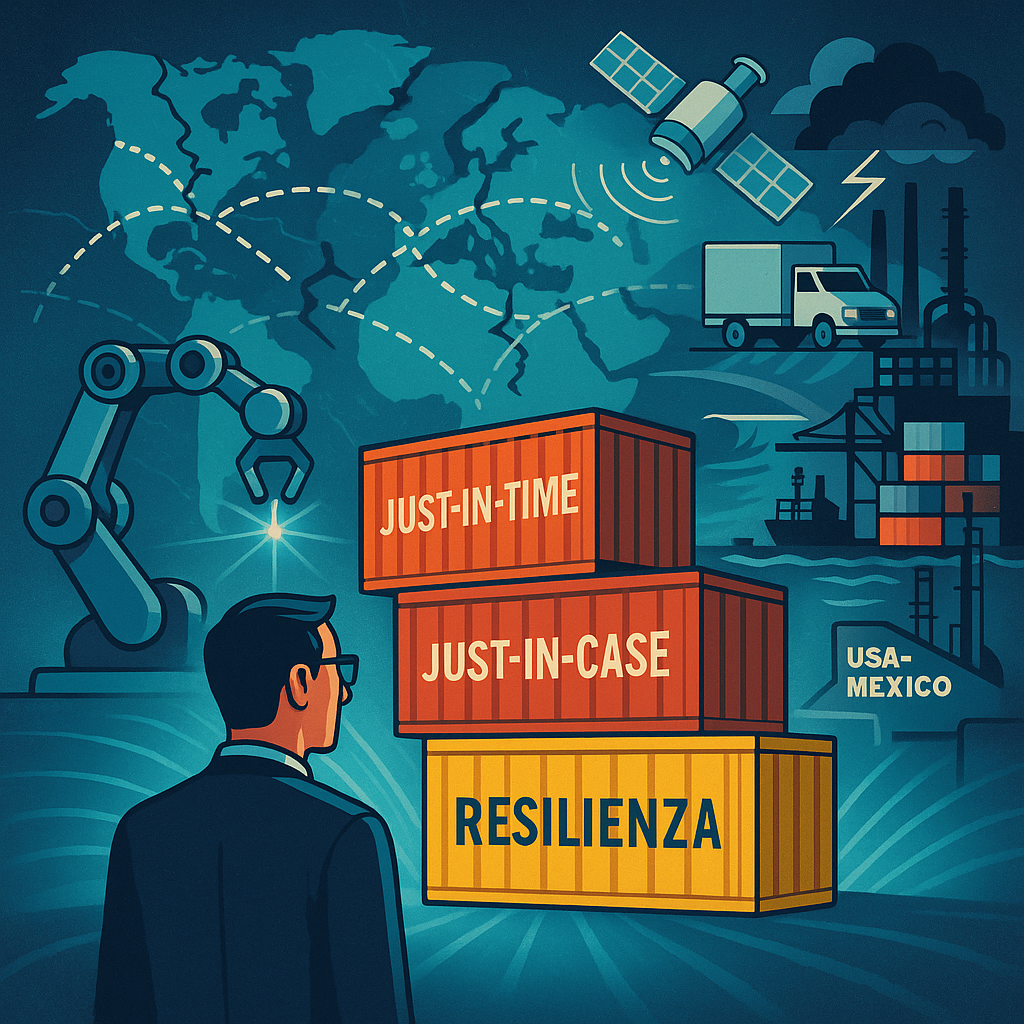
Recent geopolitical instability has rekindled attention on global supply chains, prompting U.S. companies to reevaluate decades-old strategies. The traditional "just-in-time" model, based on global stability and minimal inventories, is being replaced by a "just-in-case" approach that prioritizes resilience. Events such as the COVID-19 pandemic and rising geopolitical tensions have highlighted the vulnerabilities of long and complex supply routes.
In response, companies are relocating production to North America, embracing "friend-shoring," diversifying suppliers outside of China, and building larger safety stocks. These measures aim to mitigate disruptions and reduce exposure to geopolitical risk. Advanced technologies such as IoT, AI-driven predictive analytics, and automation now enable real-time visibility and risk modeling, making near-shoring more viable.
Resilience comes at a financial cost and requires close collaboration between COOs and CFOs. However, executives increasingly view these investments as essential. In this high-risk environment, supply chain reliability has become a critical differentiator as well as a basis for long-term competitive advantage.