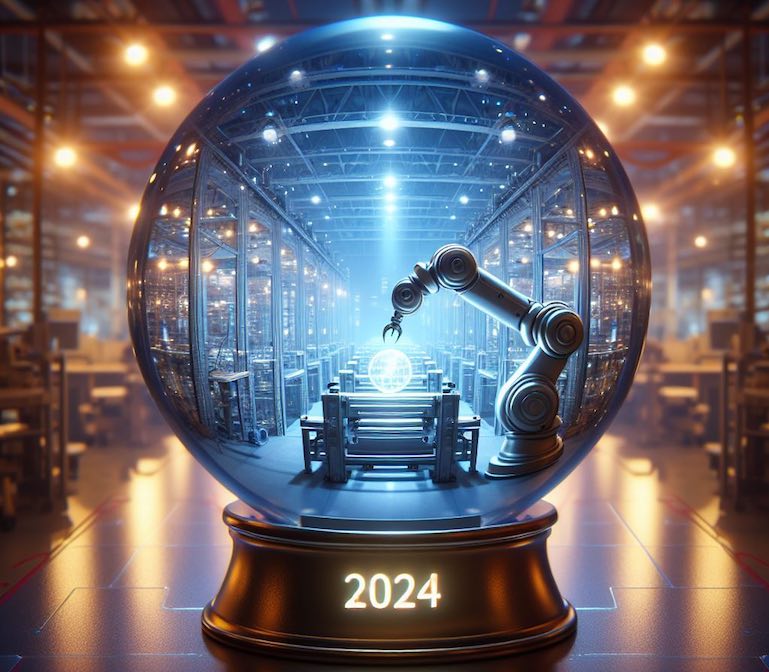
The manufacturing industry is undergoing a profound transformation, driven by advanced technologies and a renewed focus on the human role. Manufacturing 5.0, the successor to Industry 4.0, prioritizes collaboration between people and intelligent machines beyond automation.
This model seeks to empower workers' skills through integration with advanced technology, such as collaborative robots (cobots) for repetitive tasks. Thus, employees focus on activities that require creativity and critical judgment, while machines ensure accuracy and consistency. This not only increases productivity, but also improves safety and job satisfaction, radically transforming the electronics industry.
Artificial intelligence has become fundamental in today's manufacturing transformation, enabling them to refine operations and prevent problems, improving quality and speeding time to market. In addition, AI assists human teams with crucial information to make more strategic decisions.
According to a Deloitte study, 70% of manufacturing companies plan to invest in AI and automation in the next three years. However, only those that integrate technology with human talent will be able to take full advantage of these investments. Those companies that foster human-machine collaboration will lead this transformation, demonstrating that technology can empower people rather than dehumanize production processes.
In the electronics sector, mass customization has seen an exponential increase. Consumers are now looking for products that fit their particular requirements, from smartphones to customized IoT solutions, leaving generic items behind. This approach not only meets market demands, but also consolidates the company's position as a benchmark in innovation.
However, Manufacturing 5.0 goes beyond meeting commercial demands; it also addresses one of the major challenges of our times: sustainability. The company has implemented strategies that range from reducing energy consumption to recycling materials and creating products with longer life cycles. These actions, together with the use of intelligent technologies to monitor and optimize resources in real time, help the company to reduce its environmental impact.
Technological innovation is crucial, but the human factor is indispensable. The workforce drives the operation and its development is paramount. Ongoing training enables employees to acquire advanced skills to handle new technologies, preparing them for the future. A culture of inclusion and diversity enriches creativity and drives innovation.
The electronics industry has undergone a major evolution thanks to the marriage of human talent and technological advances. Manufacturing 5.0 is a human revolution that redefines the role of technology. It proposes a future where innovation and empathy coexist, transforming the electronics industry and establishing a sustainable, people-centered model for future manufacturing.
Source
https://clusterindustrial.com.mx/manufactura-5-0-la-sinergia-entre-humanos-y-maquinas/